
Who we serve
Access control for every kind of Copper property
Resort properties are not office buildings. The access problems here are turnover, seasonality, and four groups of people needing different doors on different days.
Lodges and condo buildings
One building, four kinds of people
A Copper lodge has owners who come and go, guests on short stays, staff working set hours, and vendors who should only be in the building on a Tuesday morning. A single mechanical key system cannot tell those groups apart without becoming a filing cabinet of key charts.
Access groups do that separation for you. The lobby, elevator, amenity rooms, ski lockers, and unit doors all sit on one system with different rules applied to each group.
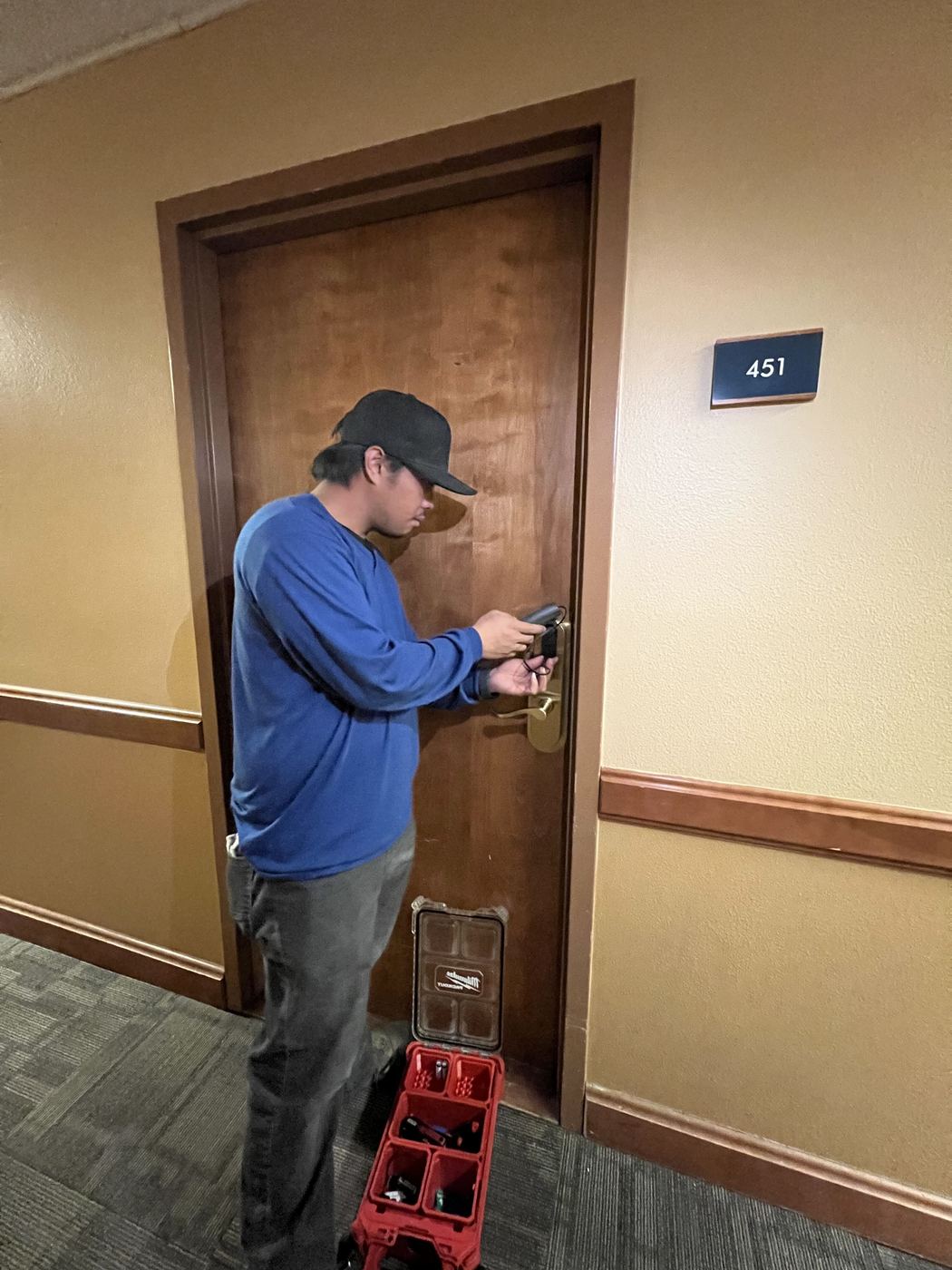
- Common entries, elevators, and amenity rooms under one dashboard
- Unit doors on the same platform as the building perimeter
- Owner access that persists, guest access that expires
- Ski lockers and storage restricted to the right unit
HOAs and property managers
The hardware is rarely the problem
Most Copper buildings already have SALTO locks on the doors. What they often do not have is anyone actively looking after the system — credentials that take a week to turn around, updates that never get applied, and no clear answer when a lock stops reading.
None of that requires new hardware to fix. In most cases the existing locks stay exactly where they are, and what changes is who administers them and how quickly you get a response.
- Existing SALTO hardware brought under active management
- Credentials issued and cancelled the same day
- Audit trails when an owner or board asks a question
- A dedicated specialist when a lock needs attention
Owner-managed and rental units
Check-in without a key handoff
Short-term guests arrive late, in weather, often after the office has closed. A lockbox solves that badly — the code spreads, and it rarely gets changed.
A mobile key issued for the reservation window solves it properly. It works when the stay starts, stops working when it ends, and nobody has to meet anyone at a door.
- Guest credentials tied to the dates of the reservation
- Access expires automatically at checkout
- No lockbox codes circulating after a stay
- Cleaners and maintenance on their own schedule-limited access
Seasonal staff housing
Built for the turnover problem
Staff housing turns over hard, twice a year, and often mid-season. Every departure is a key that may or may not come back, and a room that has to be secure for the next person by the weekend.
Revoking a credential takes seconds and costs nothing. That is the entire case for keyless in staff housing.
- Access ends the day employment does
- Reassign a room without touching the hardware
- Shared spaces like laundry and storage kept controlled
- Credentials turned around in hours at the start of each season
Back-of-house and mechanical
The doors that should stay closed
Boiler rooms, roof hatches, electrical closets, and storage carry real liability. These are also the doors most likely to be opened with a key that was copied years ago by someone nobody remembers.
Restricting these openings to a named list — with a log of every entry — is usually the fastest win on a property.
- Named access only, not a master key in circulation
- Time-limited vendor and contractor credentials
- A record of every entry, with a time stamp
- Roof and mechanical access defensible to your insurer
Commercial and retail tenants
Tenant control, association oversight
Commercial spaces inside a residential building create a permissions problem: the tenant needs to run their own space, and the association still needs to control the shared entries around it.
The system splits those cleanly. Tenants manage their own doors; the association keeps the perimeter.
- Tenants administer credentials for their own space
- Association retains control of shared entries
- After-hours delivery and service access on a schedule
- Clean handover when a tenant changes
Free site assessment
Not sure which of these you are?
Most Copper properties are several at once — a lodge with staff housing upstairs and a rental pool downstairs. The site assessment sorts out what belongs on the system and in what order.